I have been a teacher of teenagers for too long to mention, my experience has led me to want to improve their mental wellness through diverse activities.
Why?
My experience shows an increase in low-level or emerging mental health, (often self-diagnosed) conditions.
Because widening teenagers’ experiences helps to show them how to flourish.
I think you have ideas and suggestions you use as well, whether as a parent, sibling, social worker, educator or mental health professional.
Here are the topics I will be writing about:
Forest bathing meets forest school for teenagers.
Craft and creativity for wellbeing.
Education training I have delivered to support others to develop these practices.
Conferences and academic research to highlight the newest thinking in this field.
I would love to hear from you with ideas and suggestions of supporting teenagers with their mental well being. Connect with me, in the company of trees.
Imbolc arrives quietly, like a breath beneath the soil. Falling at the beginning of February, it marks the halfway point between the winter solstice and the spring equinox. While winter still holds the land, subtle shifts are already underway, lengthening days, the first birdsong, and brave snowdrops piercing frozen ground.
Rooted in Celtic tradition, Imbolc is closely associated with Brigid, a goddess of fire, creativity, healing, poetry, and fertility. Brigid embodies the returning light and the inner flame that sustains life through cold months. She is both hearth-keeper and inspiration-bringer, reminding us that renewal often begins invisibly.
Historically, Imbolc was a time of blessing the home, honouring sacred wells, and preparing for the agricultural year ahead. It celebrates potential rather than arrival, hope rather than abundance. In a modern context, Imbolc invites us to notice what is stirring within and around us, even if it has not yet taken form.
A Candle and Creative Intention Ritual
At Imbolc, fire symbolises Brigid’s presence and the returning strength of the sun.
Light a single candle at dusk
Sit quietly and reflect on what feels ready to awaken in your life Write one gentle creative intention, not a goal, but a seed
This could relate to creativity, wellbeing, home life, or inner healing. Keep the intention simple and compassionate. Place the written words somewhere visible until Ostara, allowing them to unfold slowly.
You may choose to repeat this ritual weekly, relighting the candle and revisiting your intention with curiosity rather than pressure.
Poem Suggestions
A Celtic blessing-style poem, traditional or contemporary, invoking light, warmth, and protection Poems inspired by Brigid as poet and flame-keeper
A short blessing spoken aloud, such as:
“May the spark of returning light warm what has rested
And guide what is ready to grow.”
You may also wish to write your own short observational poem, just a few lines capturing what you notice in the land at this turning point.
Imbolc Sensory Walk
Wrap up warm and step outside with the intention of looking closely.
Search for snowdrops, buds, or catkins Listen for birdsong or running water Photograph or sketch what you find Notice the quality of light and air
Later, touch the bark of a tree. Is it cold or warming? Rough or smooth? Place your palm there for a moment and let yourself feel rooted and present.
These small acts of attention anchor us in the living world and help us recognise change before it becomes obvious.
Nature Journaling at Imbolc: Tracking Subtle Change
Imbolc is an ideal time to begin (or return to) a nature journal, not to document dramatic shifts, but to practise noticing.
Why subtle noticing matters
When we train ourselves to observe small changes, a minute increase in daylight, a new sound, a softened bud, we develop patience, presence, and trust in slow growth.
Journaling as ritual
Once a week until Ostara, journal by candlelight. Treat the practice as sacred time rather than a task.
Prompt ideas
What signs of life did I notice this week?
Where do I feel warmth returning, outside or within?
What feels ready to be nurtured gently?
You may include sketches, pressed leaves, photographs, or short written reflections. Over time, this becomes a seasonal record of awakening — both in the land and in yourself.
Imbolc reminds us that transformation does not rush. It glows quietly, like a candle in the dark, asking only for attention and care. By honouring Brigid and the first signs of spring, we align ourselves with nature’s promise: that light returns, and life begins again softly, surely, and in its own time.
As winter settles in and the nights stretch long, Yule invites us to pause, gather close, and remember something ancient: the light always returns.
Celebrated around the winter solstice, Yule marks the longest night of the year and the quiet turning point when the days begin, almost imperceptibly, to grow lighter again.
For centuries, people have told stories, lit fires, and shared warmth at this time, not to banish the darkness, but to honour it as part of the cycle.
Yule is not about rushing toward spring. It is about trusting the slow return of light, both in the land and within ourselves.
What Is Yule and Where Does It Come From?
Yule has its roots in pre-Christian Northern European traditions, particularly among Germanic and Norse cultures. It was a time of feasting, fires, and storytelling, an intentional gathering in the heart of winter.
A book recommendation to get you started with all things Yule. Found in World of Books and other book retailers.
Across many cultures, the winter solstice was understood as the rebirth of the sun. Though the world remained cold and dark, the knowledge that the light was returning offered reassurance and hope. This quiet turning point mattered deeply to people whose lives were shaped by the land and seasons.
Even today, Yule reminds us that change does not always arrive loudly. Sometimes it begins as a subtle shift, almost unseen.
Sun Myths Across Cultures
Stories of the sun’s death and rebirth appear again and again throughout history:
In Norse mythology, the sun is pursued through the sky, yet never fully caught In Roman tradition, Sol Invictus, the Unconquered Sun, was celebrated at the solstice In Celtic stories, the Oak King and Holly King represent the waxing and waning of light through the year
These myths were not just entertainment. They helped people make sense of darkness, offering symbolic reassurance that life continues even when the world appears still.
Winter as a Storytelling Season
Winter has always been a time for stories. The fields are quiet, the work slows, and evenings stretch long. Without distraction, people gathered around hearths to tell tales, of gods and ancestors, animals and stars.
Yule invites us back into that tradition. This is a season for reflection, memory, and imagination. Stories become lanterns, gently lighting the inner landscape when the outer world feels dim.
Bringing Light into Modern Life
In our busy, brightly lit world, it’s easy to forget how meaningful light once was. At Yule, we can intentionally reclaim it, not through excess, but through small, mindful acts.
Lighting candles
Setting Yule intentions for your year ahead
These simple moments remind us that light does not need to be overwhelming to be powerful.
Creating a Yule Nature Altar with Found Winter Treasures
One gentle way to mark Yule is by creating a seasonal nature altar, a small, meaningful space that reflects winter’s beauty and symbolism.
Altars have been used across cultures as places of focus, gratitude, and intention. They don’t require special tools or religious belief, only attention and care.
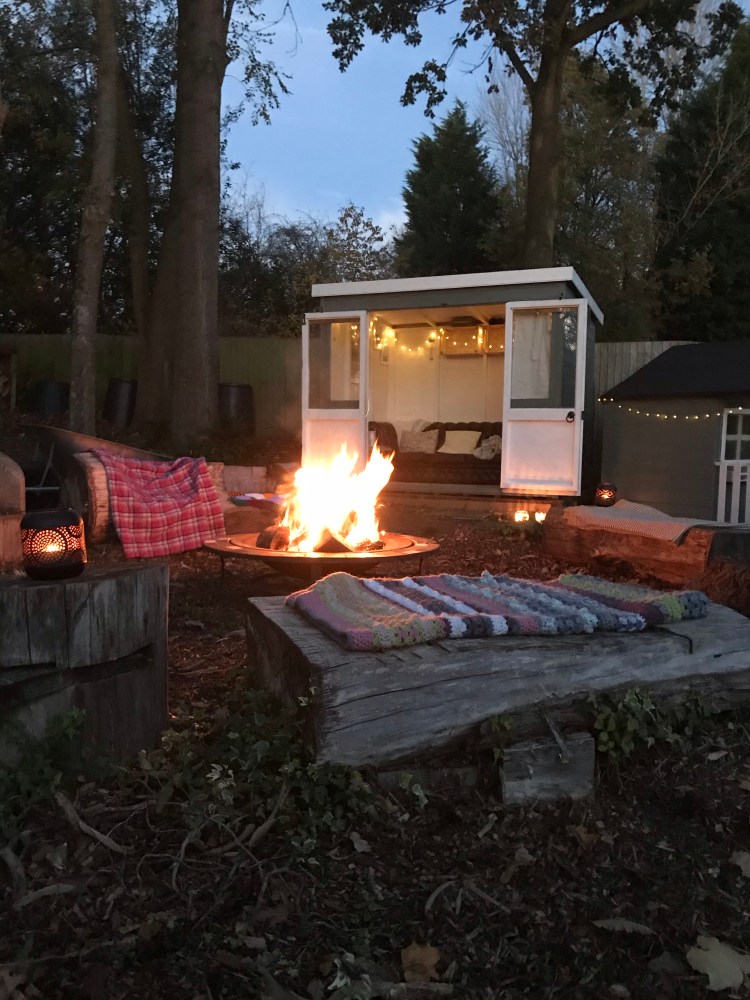
Consider using the door wreath as the start of your Yule altar.
Finding Your Yule
A Yule altar is especially meaningful when made from found objects:
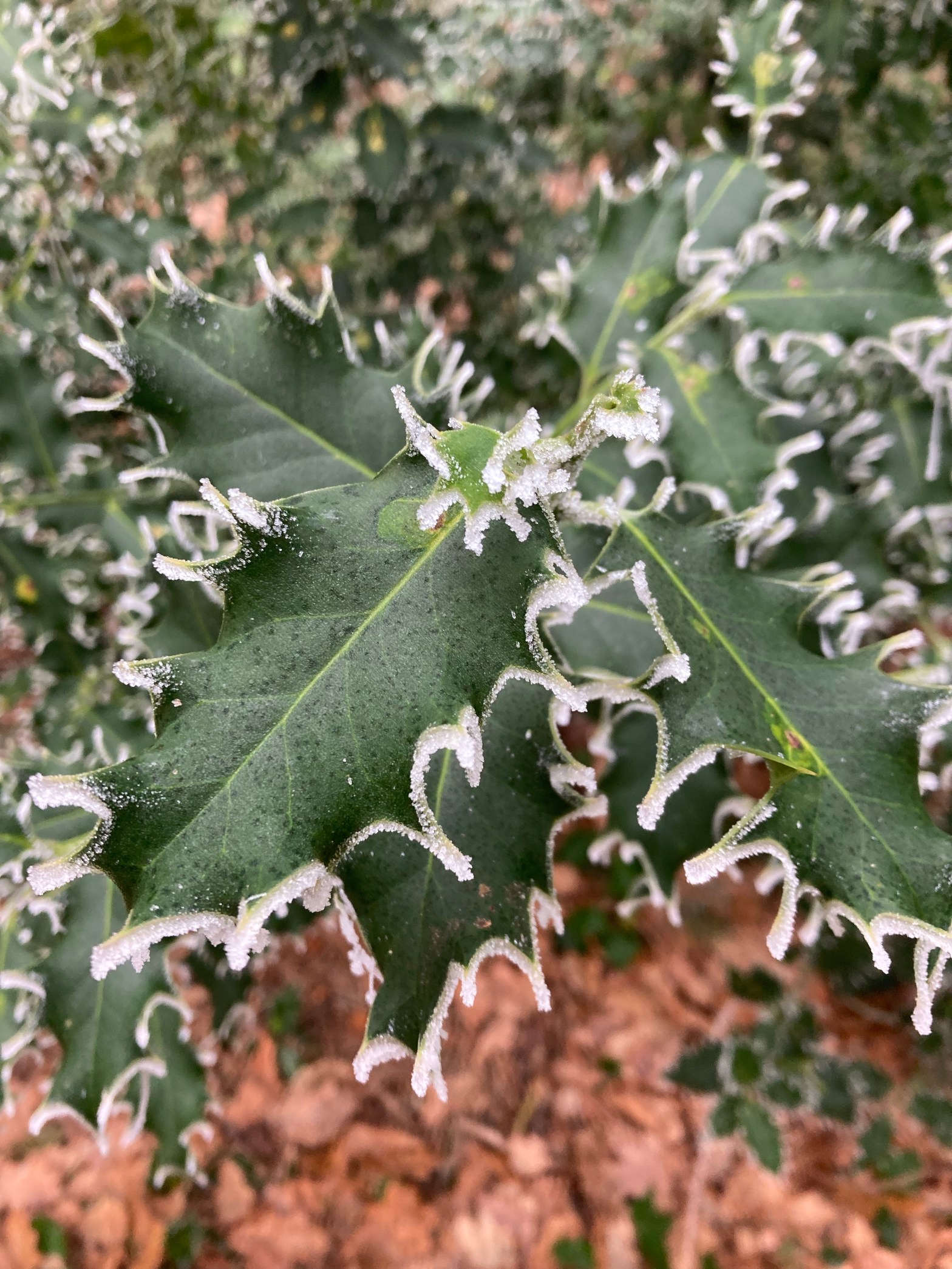
Fallen pine or fir sprigs Ivy or holly (ethically gathered) Stones, pinecones, or bark A single candle
Using what nature offers keeps the practice grounded, seasonal, and accessible.
Seasonal Symbolism
Evergreens remind us of life enduring through winter Candles represent returning light and hope Stones symbolise steadiness and patience.
Your altar does not need to be beautiful by anyone else’s standards. It only needs to feel true to you.
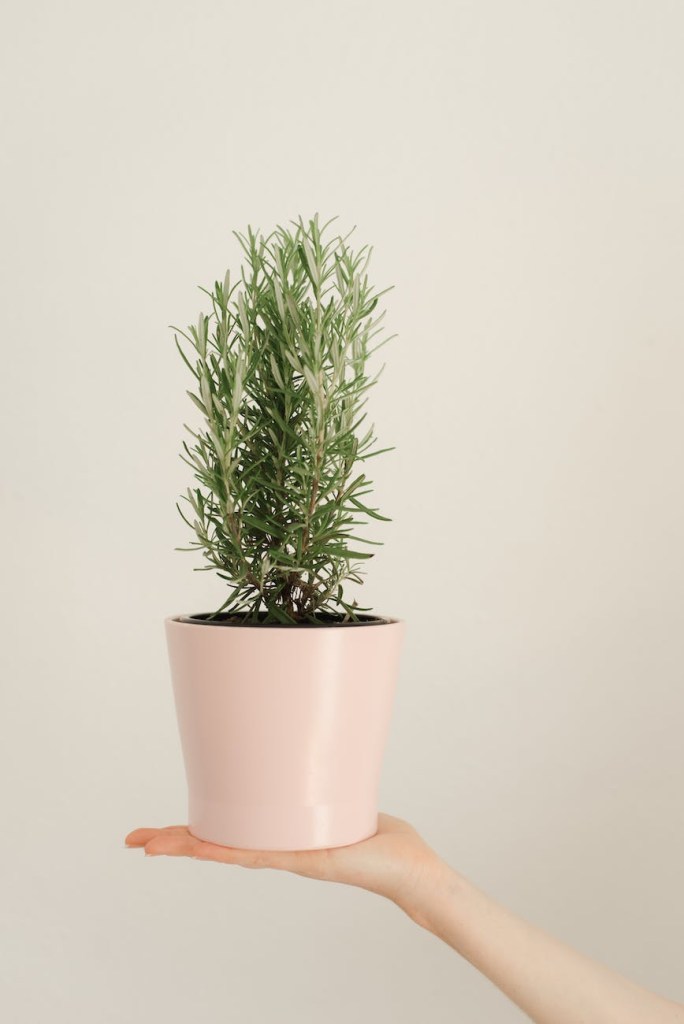
Rosemary represents remembrance, honouring those we would want to remember. Add sprigs of Rosemary to your door wreaths and Yule altars and whisper the names of those you wish to remember.
Yule Ritual: A Candle for the Returning Light
A Simple Yule Gratitude Ritual
Each evening at dusk for the 12 days of Yule:
Light a candle Name one thing you’re grateful for, aloud or silently sit quietly, noticing the flame and your breath
This ritual gently anchors gratitude and awareness during the darkest stretch of the year.
Poetry for Yule
Poetry belongs naturally to winter, it slows us down and invites reflection.
Ideas for reading:
Christina Rossetti – winter poems filled with stillness and restraint
Mary Oliver – Winter Hours
Original Yule haiku:
Longest night listens,
A small flame remembers dawn,
Hope breathes quietly.
You might like to place a poem on your altar or write your own as part of your Yule practice.
Sensory Nature Connection: Twilight Listening
Step outside at twilight Feel the cold air on your skin Notice the fading light, distant sounds, and the quiet between them
Just noticing, no need to justify, explain, or analyse.
Winter offers a different kind of beauty when we allow ourselves to slow enough to sense it.
Creative Invitation
After your candle ritual or twilight walk, try one of the following:
Sketch your altar or a winter branch
Write a short poem or reflection about darkness
Create a small collage using natural materials
Creativity at Yule doesn’t need to produce anything impressive. It is simply another way of bearing witness to the season.
A Gentle Closing Reflection
Yule reminds us that rest is not stagnation, and darkness is not failure. Beneath the stillness, life is quietly preparing to return.
May your Yule be gentle.
May your light be small but steady.
And may you trust the turning, even when you cannot yet see it.
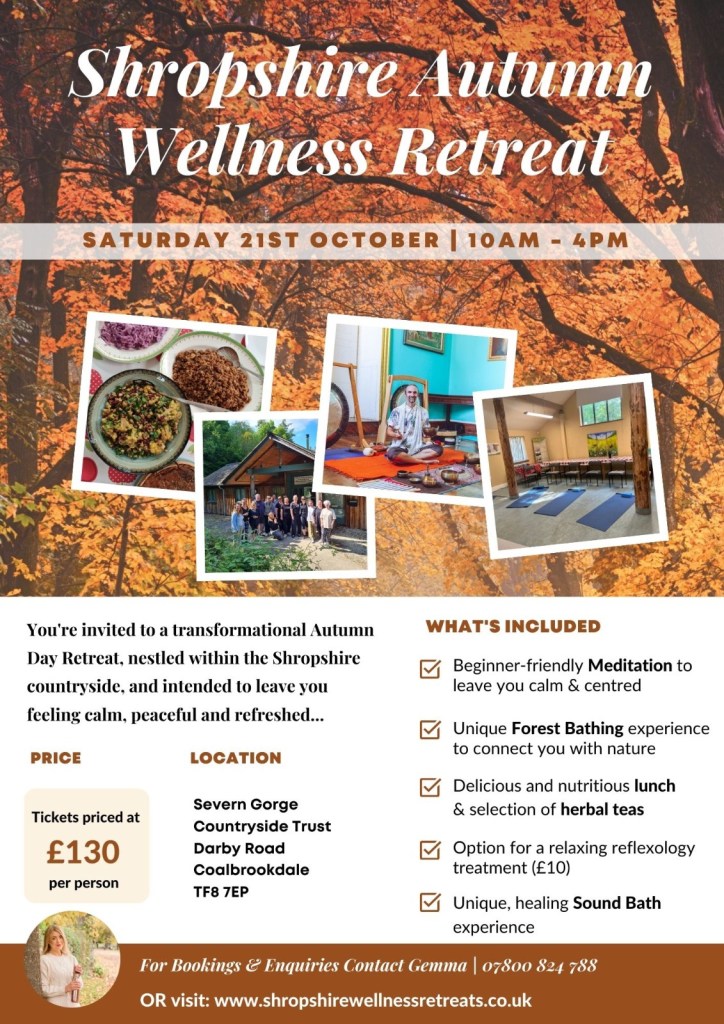
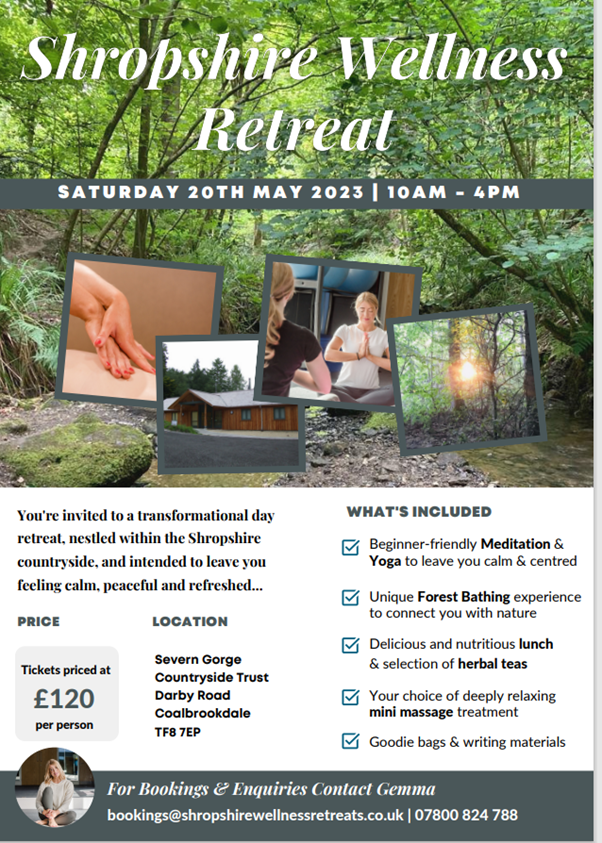
Secure your place with a small deposit and look out for updates on activities. I am so looking forward to experiencing the Sound Bath. Book your place at
These masks worked so well when meditating as part of a yoga session or when grounding at the beginning of a Woodland Wellness session. I loved making them and seeing how much people enjoyed using them as part of their relaxation.
Various recycled bits of fabric and they’re washable. Homegrown lavender and locally sourced flaxseed. Thinking of adding Rosemary for focus and memory to a few.
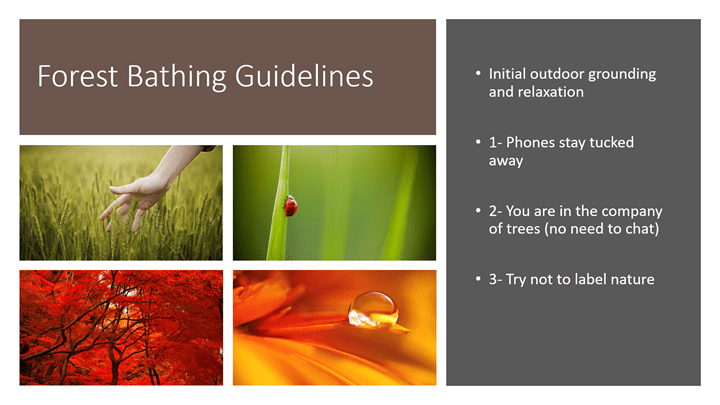
Forest Bathing is the Japanese wellbeing activity that supports our physical and mental wellbeing. These invitations can also be taken in a garden. Just slow walking, focusing on our senses, keeping phones tucked away, and with no need to chat, you are in the company of trees.
Take a slow stroll in the woods, or in your garden, and simply focus on your breathing.
Find a spot to stop, lean against a tree, or take a seat, soften your gaze (like being in a daydream) or close your eyes, and focus on what you can hear, nearby or far away.
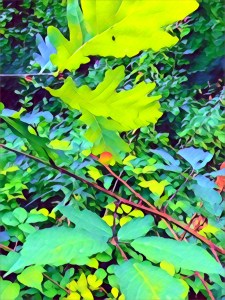
Walk slowly and see what different ‘greens’ you can find.
If it has been raining, focus on where you see water. What different places do you see the water?
Edited in Prisma app with Lemur
If it is sunny, where do you see light and shade.
Petrochor – a pleasant, earthy smell that accompanies the first rain after a long period of warm, dry weather. Consider smell; if it has been raining go out and take deep breaths.
Take a leaf and gently squeeze it, bring it to your nose and breathe deeply.
Taste. Before going outside (garden or woods), make a comforting drink; hot chocolate, herbal tea, decaff. tea, or coffee. Take your flask or drink and find a good place to sit for a while. Concentrate on the act of making the drink from your flask, the smell of the drink, savour the flavour and feeling on your tongue and in your mouth.
If you’re in an area where it is safe (lawns are ideal), take off your shoes and socks and consciously walk on the ground, feeling the earth under foot. Remember to breathe.
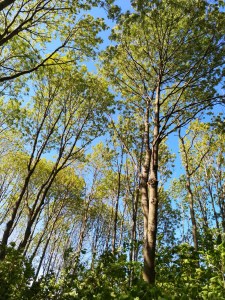
Lastly, find yourself in a place surrounded by trees, close your eyes and breathe. Open your eyes and look at the trees, walk towards one and get to know it. Maybe touch the bark, look up through its canopy, consider its life and who makes it a home. Lean on your tree for a while, breathe deeply.
Edited in Prisma app with Lemur
There are lots of studies and research that indicates being in nature, and particularly in the woods, is beneficial to our human systems. Could being close to nature be part of your self-care?
From the start of a forest bathing session we are often looking through the eyes of the poets and the painters, until we can see with our own eyes.
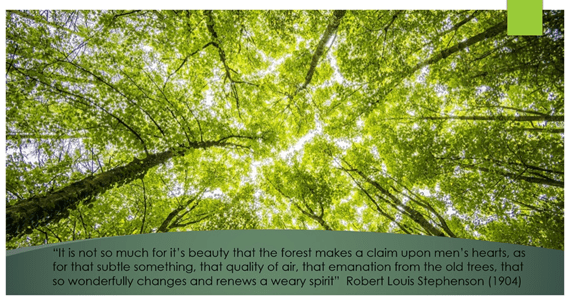
Forest Quote – Robert Louis Stephenson (1904)
I love this quote to start a session, from Robert Louis Stephenson (1904), the idea that the forest can make a ‘claim on our hearts’. That there is a ‘subtle something’, we can not put our finger quite on it, but we know we feel different after a walk in the woods. And lastly, the concept that nature and the woods, ‘renews a weary spirit’. Over the past 12 months and various lock-downs, I have delivered this virtual session, and it is clear that we are all a differing stages of weariness. Perhaps some time in the company of trees can renew the spirit.
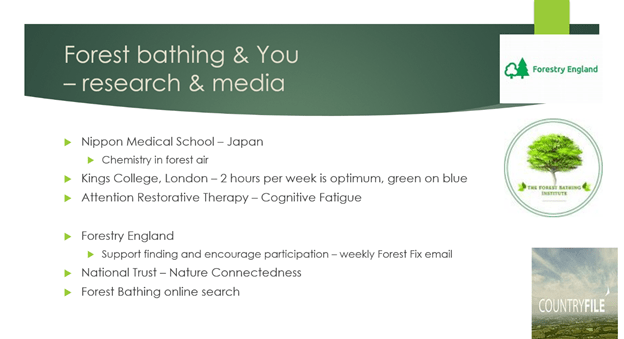
I often introduce the research to participants, both academic and mainstream media. There is a list at the end of this blog if you want to do your own further research.
Forest Bathing Research
But fundamentally, the science and wider research supports the notion that being in nature and particularly woodlands, supports our immune system, reduces our stress hormones, and lowers our blood pressure. All these physical, and measurable improvements ultimately lead to us feeling more relaxed, content, able to re-focus and take the next step.
So, whether outside in the trees, or indoors and needing to connect to nature, follow these basic Forest Bathing Guidelines.
Forest Bathing Guidelines
If your indoors and unable to get out, here is a beautiful recording that you can use to focus on. Choose to concentrate on sight or hearing for a comfortable amount of time for you. Sit comfortably, breathe easily, allow thoughts to come and then move them on with no judgement and come back to nature.
Nature Therapy: Relaxing Full Motion Forestry with Natural Sounds
Whether you are using the video or managing to get outdoors, here are some simple invitations to try out. Remember to find your place, be comfortable and relaxed, breathe easily and …..
Invitations and suggestions
At the end of this slide you can see some further suggestions to support and guide you in developing your Shinrin Yoku experiences wherever you are.
Find yourself in a quiet place, stand till or sit and take long, deep, calming breaths. Take a moment to acknowledge this time to explore your senses in this place, one at a time. If you are happy to; close your eyes or soften your gaze, like a daydream mode.
Once you feel grounded, slowly take a walk….slowly is the key…. And remember for this short time you don’t need to check your phone, even to take pictures, you don’t need to chat to anyone, you can try not to label the plants and animals you come across.
Take a walk …
Invitations to take in the woods.
Smell – a powerful sense to stoke memories.
Take a small amount of leaf, grass, flower, earth, moss, and take it to your nose and take a deep breath. Be wholly aware of the sensations and experience of the smell. Perhaps, scrunch it up a little and breath in again, how does this change the sensations?
The smell or earth and certain moss takes me back to Guide camp, being dirty and not caring a single bit. What memory or sensation does smell evoke for you?
Hearing – sound is all around but what do we hear?
Maybe sit for a moment and breath easy, settle the breath and continue to relax. If you feel comfortable close your eyes or find that daydream mode again. Focus on all the sounds you can hear, with no thought of good or bad sounds, just what you can nearby and after a while what you can hear further away.
Sound makes my heart skip a beat sometimes. What do you sense?
Touch – fingers are so sensitive and are used so frequently, perhaps we need to remember to feel the touch.
Continue your slow, slow walk and consider the textures you see and choose; a leaf, twig, moss, tree, that you are drawn to. Look for a while at the shape and texture, image what it might feel like. Use the tips of your fingers to gently trace the outer edges, the inner places, of your piece, consider closing your eyes at this point to engage the sensitivity of the fingertips.
If this felt calm and grounding (and it is safe to do so) why not take your chosen piece back to your real world, to look and touch at a time when you need to be reminded about calm. If your piece was a tree, remember where it is and return to it as often as you need to.
Taste – The forest offers a glut of amazing treats, but unless you know what you are picking, best to bring your own.
Our taste buds offer a moment to pause, and be overwhelmed by the sensations. Remember savouring that special cup of tea, the square of chocolate, the juicy nectarine – when we savour our tastes we are transported to an amazing place for a short time.
Prepare your drink of choice to enjoy in the woods, herbal tea and hot chocolate work well. Have a flask, a special cup, and maybe a teapot if brewing. Find a quiet, uninterrupted spot and create a comfortable seating area. Bring yourself back to a calm stillness with your breath, as you begin the ritual of making and then savouring the sensation of the drink on your mouth, tongue, tastebuds, throat and on.
The sensation and mindful ritual of the drink creates a sense of belonging and comfort for me. What would you take and I wonder what you’ll feel.
Enjoy your time in the woods or natural space, and remember all these activities can be comfortably enjoyed in a back garden.
There are so many more ideas of what to do to gain the benefits of spending time in nature. Can’t wait to share more again soon. Make contact and let me know what you’d like to hear more about.



















 Jane Owen